




What Metrics Matter Most When Using AI in Marketing?


AI is transforming marketing, but data alone doesn’t drive growth—insight does.
As more businesses automate ad targeting, content generation, personalization, and performance optimization with AI, the question becomes not just what is the machine doing, but how do we measure if it’s working? Metrics matter more than ever, and the wrong ones can leave you spinning in circles. So how do you separate signal from noise?
Here’s a high-level yet practical breakdown of the metrics that matter most when you’re using AI in your marketing stack—whether you’re running lean experiments, scaling campaigns, or building automation-driven funnels.
1. Predictive Accuracy
If you’re using AI for forecasting, lead scoring, or behavior prediction, the first thing to measure is how well the model is actually predicting.
- Precision & Recall: Especially relevant when your AI flags high-intent leads or segments potential churn. Precision tells you how many of your “predicted good leads” are truly qualified. Recall tells you how many of the truly good leads the model actually found.
- F1 Score: A balance of precision and recall. This is useful when false positives and false negatives both carry costs—like misidentifying someone as high-LTV or low-risk.
- Model Confidence Intervals: Not all predictions are equally reliable. Knowing how confident the AI is in its outputs helps you decide when to trust automation and when to involve a human.
Why it matters: A flawed model that looks good on paper can quietly erode campaign ROI. Without accuracy benchmarks, you’re flying blind.
2. Engagement Quality (Not Just Quantity)
AI can help you personalize subject lines, generate social content, or dynamically tailor web pages. But more content ≠ better content.
- Click-to-Open Rate (CTOR): Did people who opened your email actually engage with your CTA? This reveals whether AI-written copy is compelling.
- Scroll Depth & Time on Page: Especially important when using AI to generate blogs or landing pages. Do readers stay, or do they bounce?
- Social Shares & Saves (Not Just Likes): These signal deeper engagement with AI-generated creative—more predictive of reach and future conversion than vanity likes.
Why it matters: If you’re only measuring output (emails sent, posts scheduled), you’re not evaluating AI’s true value: connection.
3. Conversion Attribution
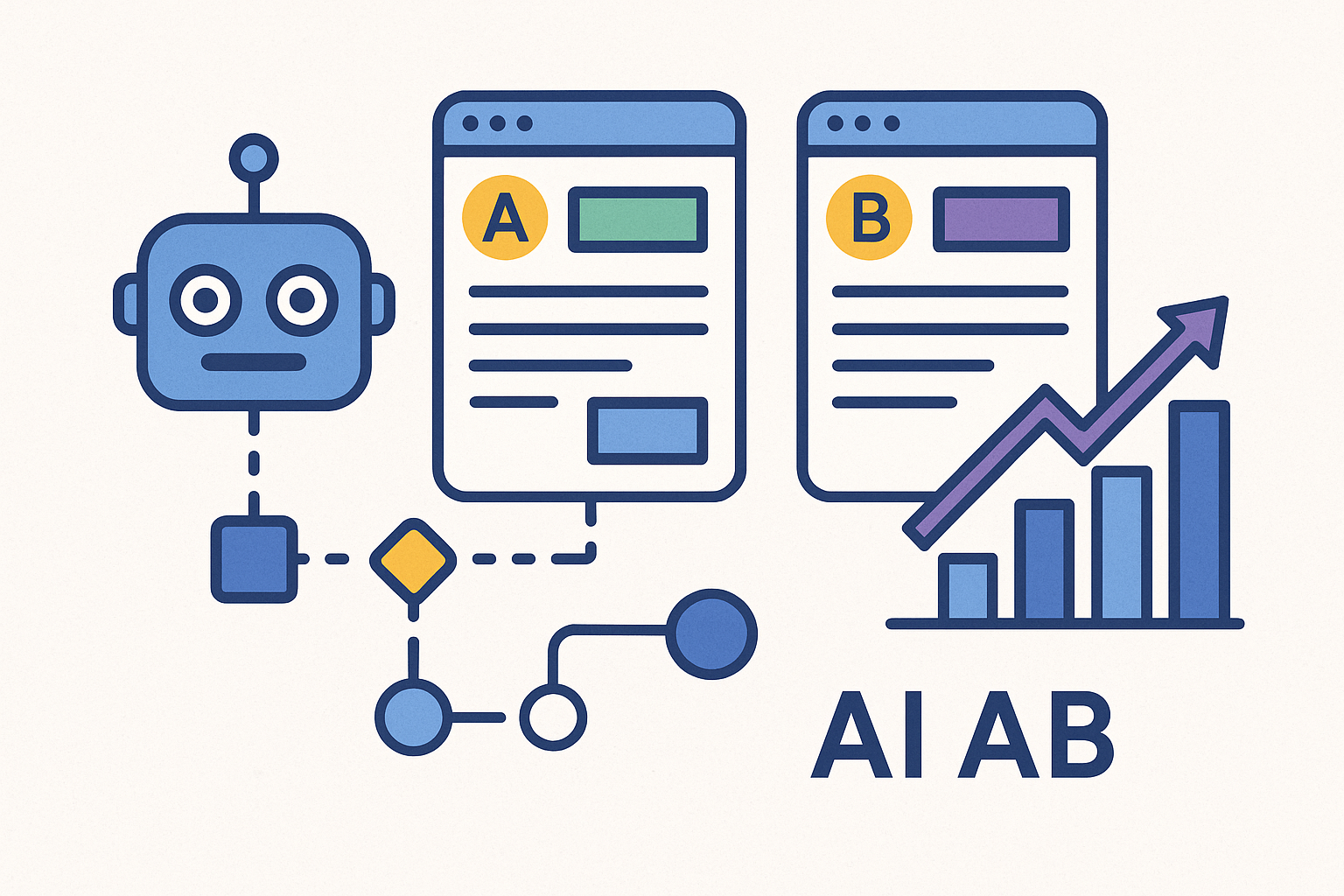
AI might help you personalize touchpoints or A/B test creative, but its effectiveness hinges on one thing: did it convert?
- Conversion Rate by Variant: Whether AI writes your ad copy or selects product images, track which version drives action—not just clicks.
- Multi-Touch Attribution: Many AI tools assist across the funnel. Look at whether AI-driven personalization on touchpoint 3 helped close the deal—even if touchpoint 1 gets the credit.
- Incremental Lift: This one’s big. How does performance change with the AI tool versus without? Use holdout groups or A/B tests where possible.
Why it matters: If you can’t isolate the impact of your AI tool, you can’t justify—or optimize—your investment.
4. Customer Retention & LTV Metrics
If AI is driving your content engine, onboarding flow, or email sequences, you’ll want to measure long-term impact.
- Churn Rate by Cohort: Are customers acquired through AI-optimized campaigns sticking around?
- LTV by Segment: Does AI-powered personalization correlate with higher spending or deeper engagement?
- Net Promoter Score (NPS): If AI is handling your support chatbot or product recommendations, measure how it impacts satisfaction and advocacy.
Why it matters: Acquisition is only half the equation. The best AI-driven campaigns keep customers coming back.
5. Operational Efficiency
AI should also save time, reduce manual effort, or free your team to focus on strategy.
- Time Saved per Task: How long did it take to create that landing page before versus now? If AI reduces content creation time by 60%, that’s a tangible ROI.
- Cost per Output (CPO): A key metric for teams using generative AI tools. How much does each blog post or ad cost in staff time + AI subscription? Is it cheaper than outsourcing or doing it manually?
- Content Volume vs. Approval Time: Are you able to create more assets without bottlenecking your review process? AI is only helpful if it integrates smoothly into your workflows.
Why it matters: Efficiency gains compound over time, especially in small teams. Don’t overlook this hidden ROI.
6. Ethical & Brand Safety Metrics
As AI becomes more autonomous, it’s crucial to monitor outputs for accuracy, alignment, and unintended risks.
- Brand Consistency Score: Some teams manually audit AI-generated content to ensure tone, visual identity, and values are upheld.
- Content Flagging Rate: How often does the AI generate off-brand, incorrect, or inappropriate material that needs review?
- User Feedback Loops: When AI interacts directly with users (e.g., chatbots), track satisfaction scores or escalation rates.
Why it matters: AI gone rogue can cost you reputation—and trust is much harder to win back than it is to measure.
Context is King
AI can unlock incredible leverage—but only if you track the right things. Resist the temptation to drown in dashboards. Instead, build a simple stack of metrics tied to your goal:
- If you’re using AI for lead gen, focus on predictive accuracy and downstream conversions.
- If it’s powering content, measure engagement depth and time to produce.
- If it’s fueling personalization, look at lift, retention, and customer satisfaction.
Whatever your setup, pair automation with human insight. Let AI handle the heavy lifting, but keep your eyes on the right signals—and your team focused on what actually moves the needle.
Because at the end of the day, the most important metric isn’t what the AI delivers.
It’s what your business does with it.