




Building AI-Powered Customer Personas in Under 30 Minutes

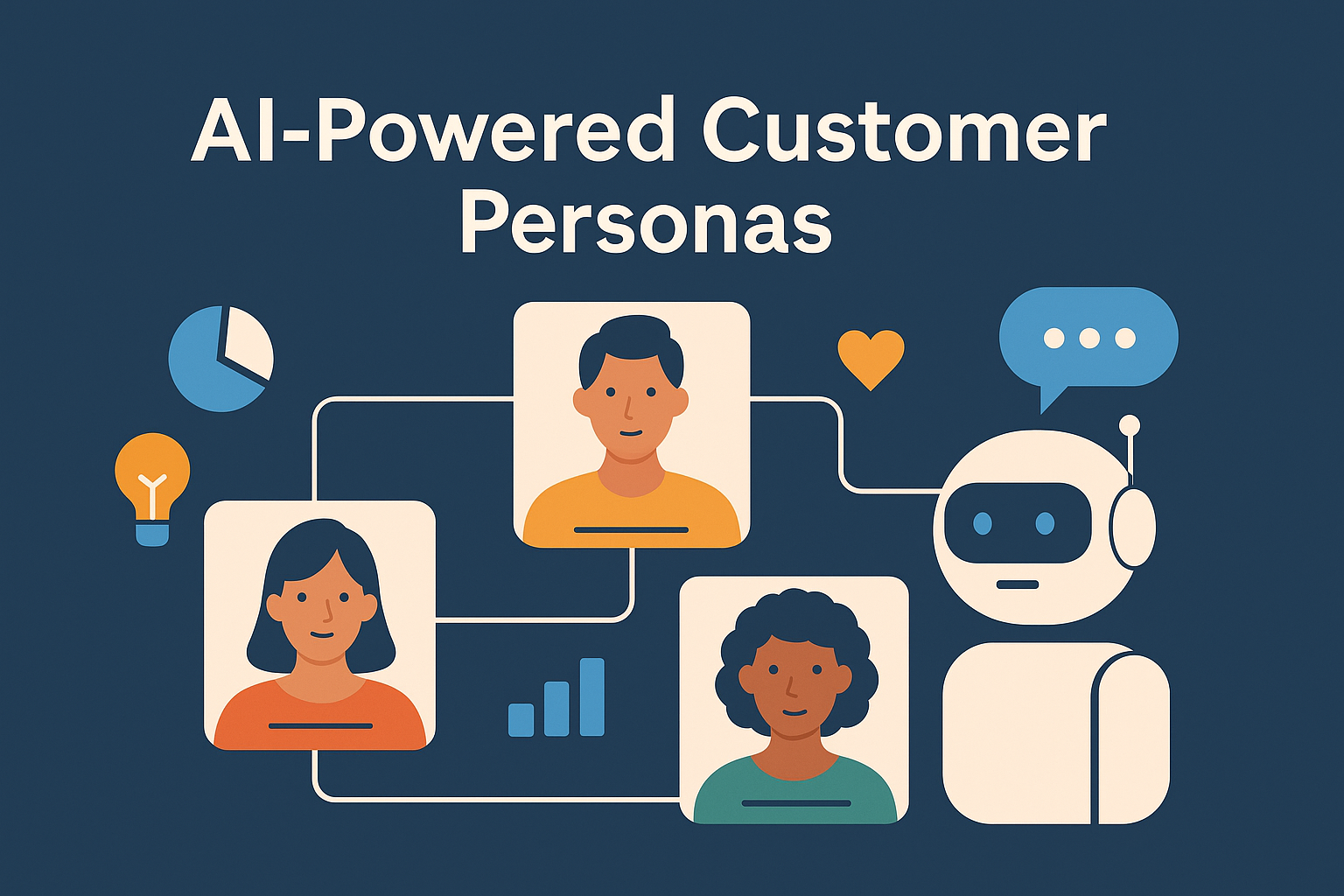
Every marketer knows that good strategy starts with understanding your audience.
Enter AI-powered personas: fast, insightful, and surprisingly accurate.
With the right tools and workflows, you can build data-rich, behavior-informed customer personas in under 30 minutes—without a market research budget or in-house data science team.
This guide walks you through how to do exactly that—step by step—with tools you likely already use (or can access for free).
Let’s build smarter, faster, and more usefully than your old strategy deck ever could.
Why AI Personas Work for Lean Teams
Traditional personas are static. They’re often based on assumptions, qualitative anecdotes, or best guesses—and they go stale fast. AI flips that model. Instead of starting with guesswork, it starts with real signals: content consumption patterns, search intent, engagement behavior, and even language sentiment. You get speed and depth—without the drag.
What makes AI personas different:
- Built from actual behavioral or interest-based data
- Continuously updated with new insights
- Aligned to messaging, channels, and content performance
- Usable across teams (marketing, sales, product)
Step 1: Gather Input Data in Minutes
The first step is to feed your AI with the right signals. You can create surprisingly detailed persona inputs with just three data points:
- Your Top Performing Content (by engagement or conversion)
Use Google Analytics, HubSpot, or your CMS to find which blog posts, landing pages, or email campaigns are driving interest or conversions. - Customer Reviews, Testimonials, or Sales Call Notes
Even 10–20 short reviews or notes can reveal powerful language patterns and common needs. - Your Current Email List or Social Audience
Export anonymized segments from Mailchimp, ConvertKit, or Meta’s Audience Insights.
🛠 Tools You Can Use:
- Google Analytics
- HubSpot CRM or notes
- G2 or Trustpilot for reviews
- Meta Audience Insights
- ChatGPT, Claude, or Perplexity for analysis
Step 2: Feed the Data Into an AI Prompt
Now comes the fun part: distilling the data into structured persona profiles.
Prompt Example (for ChatGPT or Claude):
“You are a SaaS marketing strategist. Based on the inputs I provide, generate a customer persona that includes:
– Demographic sketch
– Top 3 goals
– Key challenges
– Messaging triggers
– Preferred content formats
– Objection points
– Language style
Assume I’m a lean B2B SaaS startup targeting SMBs.”
Paste in reviews, headline performance, or customer comments after this prompt.
⚡ Pro Tip: Break your data into themes—e.g., “Reviews from paid users,” “Landing page feedback,” or “Ad comments from leads.” Prompt each one separately to generate multiple persona types.
Step 3: Refine & Segment With Zero Waste
AI will give you a detailed response—but you’ll want to segment and prioritize. Not all personas are equally useful.
Here’s how to sanity-check and refine:
- Group by buying stage: Some personas are TOFU (top of funnel), others are BOFU buyers. Tag accordingly.
- Score by value: Which persona best aligns with your high-ticket product or fastest sales cycle?
- Cross-reference with metrics: Use conversion data to validate which segments match past sales.
Use AI again here:
Paste multiple AI personas into a new prompt:
“Which of these personas is most likely to purchase a $99/month SaaS tool for project collaboration? Justify briefly.”
Step 4: Map Personas to Content, Messaging, and Offers
Now that you have usable personas, connect them to action. This is where your lean team reaps the biggest rewards.
Build a matrix like this:
| Persona | Goal | Messaging Angle | Content Format | CTA |
|---|---|---|---|---|
| “Busy Operations Manager” | Wants to reduce task overload | Save 6+ hours/week with automation | Short videos, swipe files | “Get the Toolkit” |
| “Founder Scaling Fast” | Needs investor-ready reporting | Show real-time growth | Case studies, dashboards | “Try Free Demo” |
Add this table to Notion, Google Sheets, or Airtable and link it to your marketing workflows. These aren’t personas to sit in a slide—they’re executional tools.
Step 5: Operationalize With Zapier or Airtable
Here’s where AI personas move beyond theory. You can automate persona-tagging or routing in your stack:
- Use GPT with Zapier to tag leads by persona type based on form data
- Use Airtable to dynamically link persona traits to campaign copy
- Use Notion AI to surface persona-based messaging guidelines during campaign planning
You don’t need a CDP (customer data platform). Just a lean system that turns insights into actions.
Optional: Keep Personas Fresh with AI Monitoring
Your audience changes. Markets shift. The beauty of AI personas is that you can update them without rework.
Every quarter, run the same process: new data in, new prompts out, refinements made. If you’re using tools like SparkToro, Hotjar, or even Google Trends, you can feed those signals into ChatGPT and get quick refreshes.
Prompt for updates:
“Update this customer persona based on these three new data points: recent landing page behavior, email replies, and competitor reviews. Keep the tone consistent and make adjustments to messaging triggers.”
Personas Are Strategy Fuel, Not Paperwork
In a lean, AI-driven marketing team, customer personas aren’t a one-time deliverable. They’re living assets. They power your copy, your campaigns, and your conversions.
With this 30-minute process, you get rich, usable personas—ready to map to real funnel stages, not buried in a PDF.
So skip the whiteboard sessions and get to building. Because the faster you understand who you’re marketing to, the faster you can market smarter.